

Grant McClure
Biography
I am a Doctoral Researcher in Biomedical Photonics and Quantum Sensing in the School of Physics and Astronomy at the University of Glasgow. My research brings together biomedical engineering, quantum technologies, advanced imaging and cellular biology to explore new ways of understanding the human body. My project is with DiveIn CDT which focuses on interdiciplinary research, through this I have joint supervision with Dr Caroline Muellenbroich in Physics, Dr Sam Bayliss in Engineering and Dr Gordon Hedley in Chemistry,
My PhD will focus on molecular quantum nanosensors (MoQNs) and their potential for investigating cardiac cells. These nanosensors use quantum properties of molecules to measure temperature within living cells, offering a new approach to studying cellular physiology. My research will investigate how these nanosensors can be manufactured reproducibly, how their optical and quantum properties relate to their performance, and how they can be applied to biological systems.
I will explore their application in human induced pluripotent stem cell-derived cardiomyocytes, a model used to study heart muscle cells. By combining quantum sensing with optical imaging techniques, including fluorescence lifetime imaging microscopy (FLIM), I aim to investigate how intracellular temperature relates to cellular metabolism and electrical activity. Ultimately, this research could contribute to new tools for studying cardiovascular disease, understanding cellular function and supporting drug development.
During my previous research, I explored the use of generative AI, particularly diffusion models, for synthesising biomedical microscopy images. This work investigated how synthetic data could help address limitations in biological imaging datasets and support the development of machine learning approaches for cell analysis. I am interested in how generative AI and computational imaging can complement experimental techniques, creating new opportunities to analyse biological systems and extract meaningful information from complex imaging data.
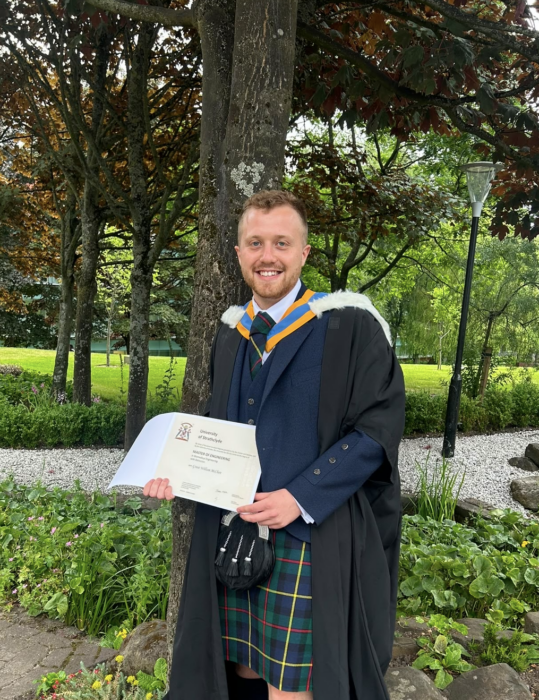
I hold an MEng in Biomedical Engineering from the University of Strathclyde. With a background spanning engineering and the life sciences, I am particularly interested in applying technologies developed in physics and engineering to biological challenges. I enjoy hands-on prototyping, microscopy and exploring ideas across disciplines, and I am keen to collaborate with researchers in quantum physics, materials science, photonics and cell biology.
Education
MEng Biomedical Engineering – University of Strathclyde